Designing human-centered GenAI systems for content sharing.

I examine technologies that support content creators and viewers in expressing personal values and authenticity, maintaining agency, and building social connections within algorithm-mediated content-sharing systems.

Keywords: Human-Computer Interaction, Social Computing, Content Creation, Generative AI

Profile photo placeholder
Dr. Shuo Niu
Computer Science
Clark University
Office: CMACD 323

Introduction

I’m a tenure-track faculty member in the Computer Science Department at Clark University. My research examines how generative AI is changing content creation on social media, including three key themes:

  • the social experiences shaped by algorithm-mediated content-sharing systems
  • the implications of generative AI use in content creation for creators, audience, platforms, and society
  • the design of new GenAI-powered systems that preserve creative values, identity, agency, and safety in human–AI co-creation

My interdisciplinary research spans HCI, mental health, and education, focusing on how generative AI and algorithmic platforms shape users’ sense of authenticity, values, agency, and social connections. I employ mixed methods, including large-scale analyses of user-generated content, empirical surveys and interviews with creators, as well as system design, prototyping, and evaluation.

Before joining Clark, I obtained my Ph.D. degree in Computer Science from Virginia Tech. My advisor was Dr. Scott McCrickard.

Quick Info

  • Research: HCI, CSCW, GenAI
  • Recent venues: CHI, CSCW, CUI
  • Lab: AI4UGC Lab
  • Student research: There is no PhD program in my department; research only with undergraduate and master’s students.

Recent News

  • Jan 2026
    Three Papers Accepted at CHI 2026
    When Generative AI Is Intimate, Sexy, and Violent: Examining Not-Safe-For-Work (NSFW) Chatbots on FlowGPT
    Negotiating Digital Identities with AI Companions: Motivations, Strategies, and Emotional Outcomes
    Creating Disability Story Videos with Generative AI: Motivation, Expression, and Sharing
  • Dec 2025
    One paper accepted at CSCW 2026
    Watch Me Watch: Reaction Videos as a Social Form of Online Video Engagement
  • Dec 2025
    Awarded $8,500 AI Innovation Grant by Clark University
    Topic: Developing and Teaching Meta-Prompting for Media Production, to the AI Innovation Fund.
  • Oct 2025
    One journal paper accepted by ACM Transactions on Recommender Systems
    A Literature Review of Ethical Considerations in Recommender Systems for User-Generated Content in Human-Computer Interaction
  • July 2025
    One paper received Best Paper Award at CUI 2025
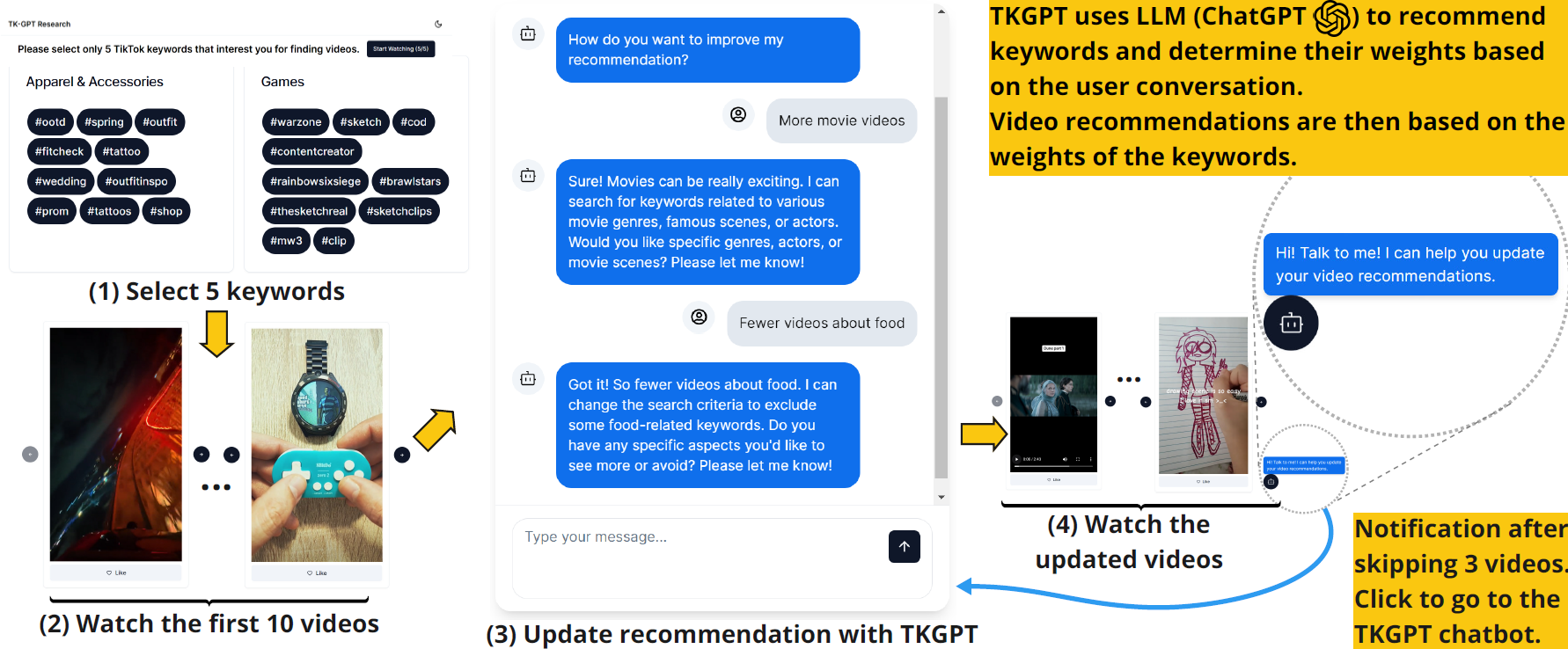
    Chat with the 'For You' Algorithm: An LLM-Enhanced Chatbot for Controlling Video Recommendation Flow
  • July 2025
    Nominated to serve as a committee member at the Natural Sciences and Engineering Research Council of Canada (NSERC).
  • April 2025
    Serve as a panelist for the NSF Directorate of STEM Education.

Project Highlights

All Publications
GenAI for Constructivist Learning

GenAI for Constructivist Learning

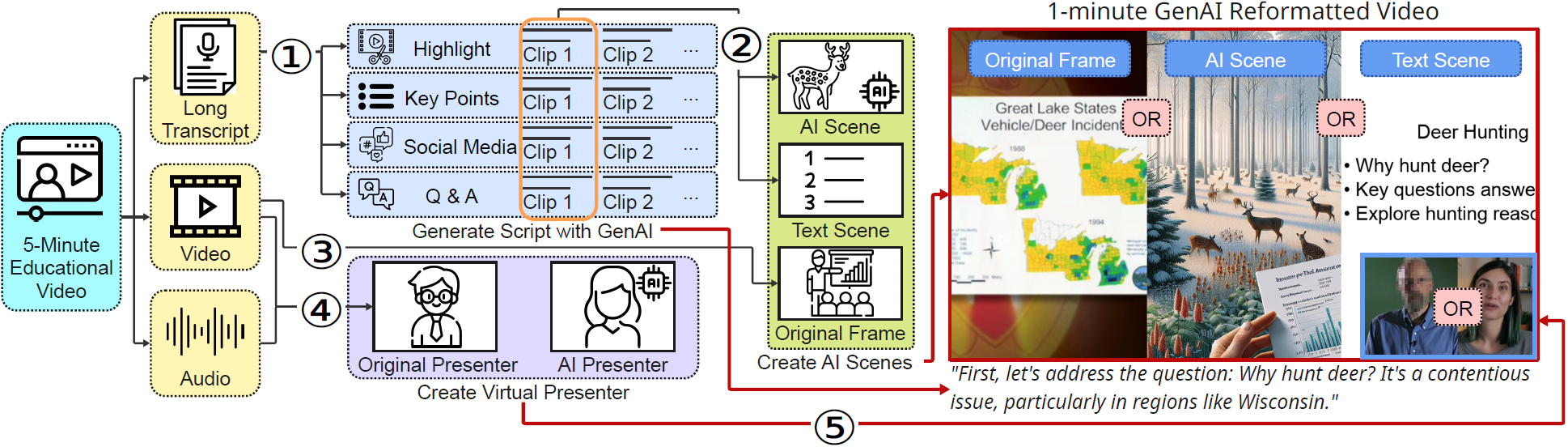
Designing GenAI tools to support the creation of learner-generated reflection videos and to evaluate constructivist learning outcomes, student engagement, and knowledge retention.

  • Surveyed how 360 users perceive AI generated learning videos.
  • Designing GenAI-enhanced systems to support video-based learning experiences.
GenAI for Constructivist Learning

Disability Storytelling with GenAI

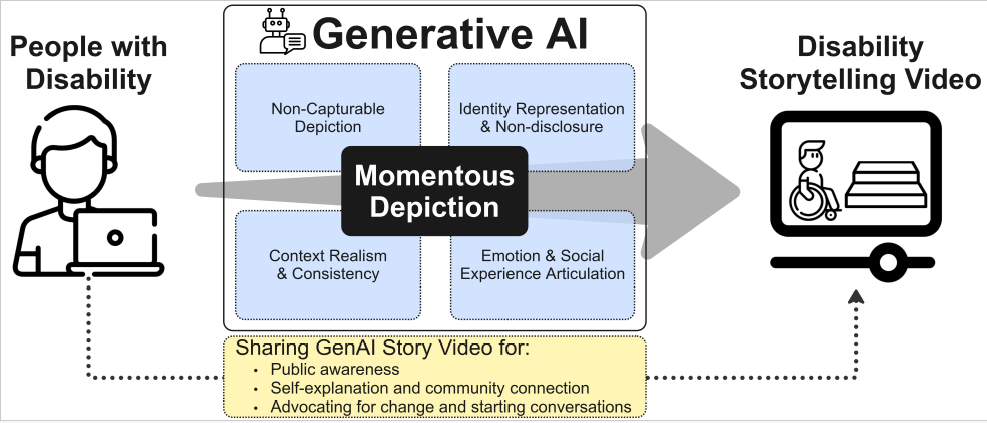
Studying how GenAI supports creating storytelling videos by people with disabilities, and designing tools to support identity expression and advocacy needs.

  • Analyzed disability creators’ videos to understand how they use video content for disability advocacy.
  • Interviewed local disability advocacy groups to understand their perceptions of GenAI-created stories.
  • Designing GenAI tools to support disability expression.
GenAI for Constructivist Learning

User-Created AI Agents as a new Social Experience

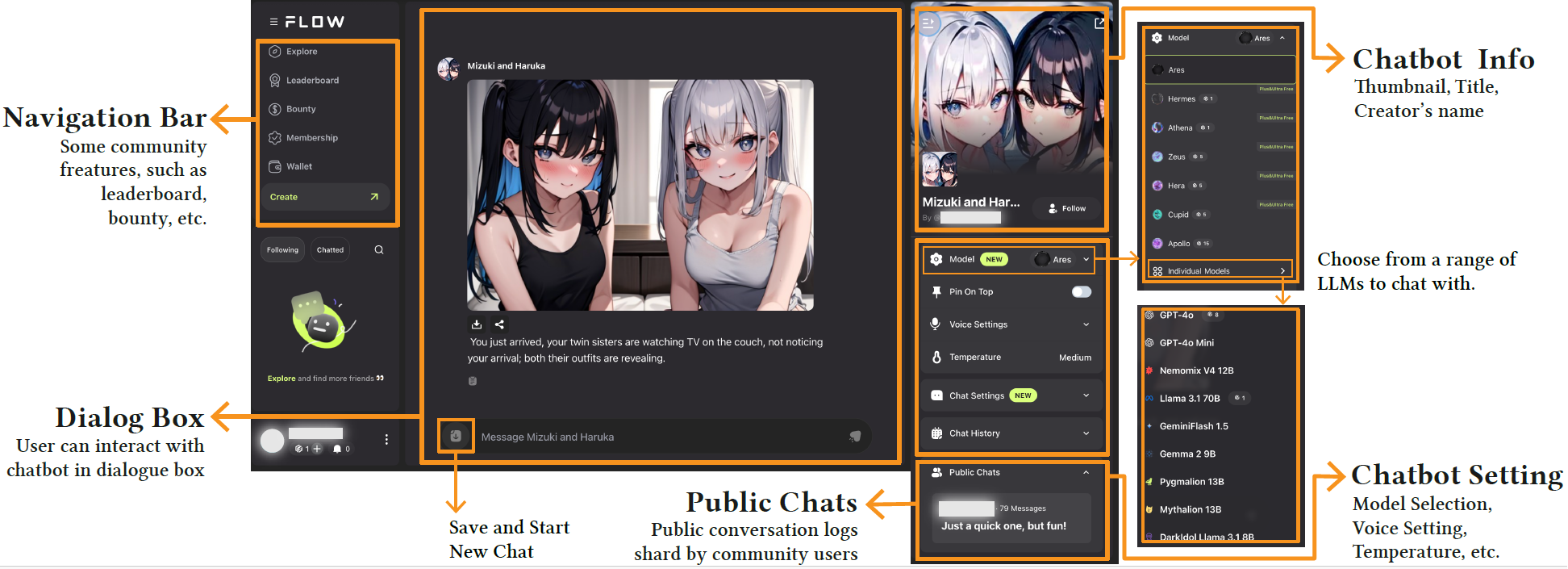
Studying the motivations for, and risks of, interacting with character-based AI agents on emerging LLM agent sharing platforms.

  • Examined how FlowGPT hosts and governs Not-Safe-for-Work (NSFW) chatbots.
  • Examined how Character.AI users negotiate identities when interacting with AI companions.
  • Examining the mental health implications of interactions with character AI companions.
GenAI for Constructivist Learning

LLM-Supported Agency in Recommender Systems

Designing and evaluating LLM-enhanced conversational interfaces that help users articulate their interests and understand algorithmic recommendations for user-generated content.

  • Designed TKGPT and evaluates how it affects sense of agency.
  • Designing a new system that visualizes the topics used to shape video flows.
GenAI for Constructivist Learning

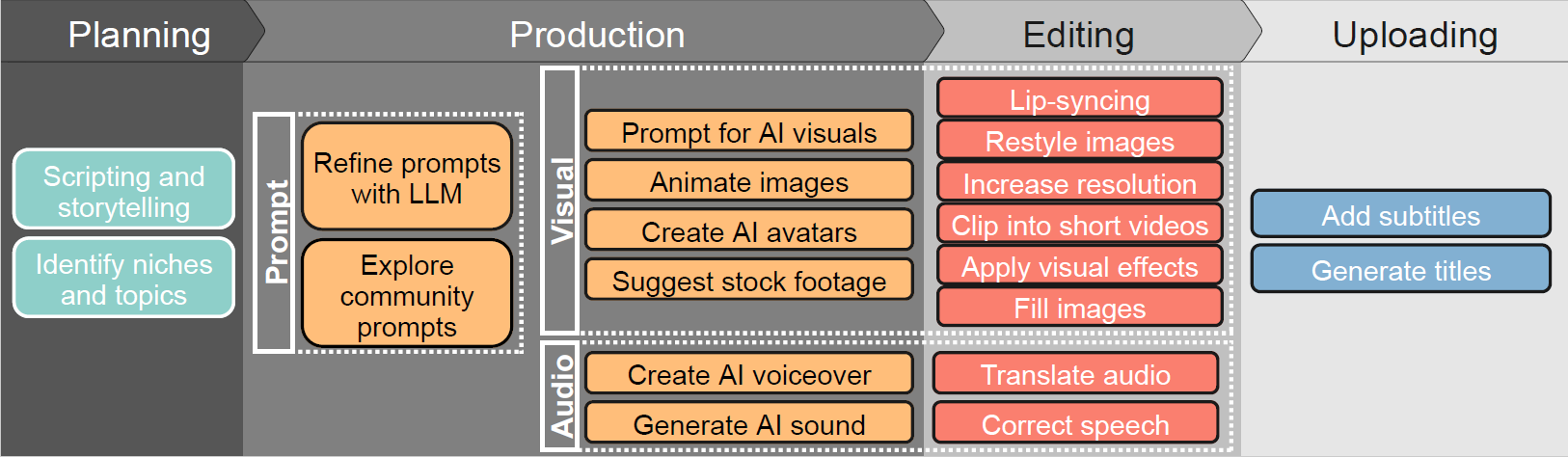
Practices and Risks of GenAI use in Content Creation

Understanding practices, motivations, and risks of GenAI usage in content creators' communities.

  • Examined how content creators use GenAI in their creative practices.
  • Built a model of GenAI use cases within the video production pipeline.
  • Examining how creators use GenAI for creating monetizable content.
GenAI for Constructivist Learning

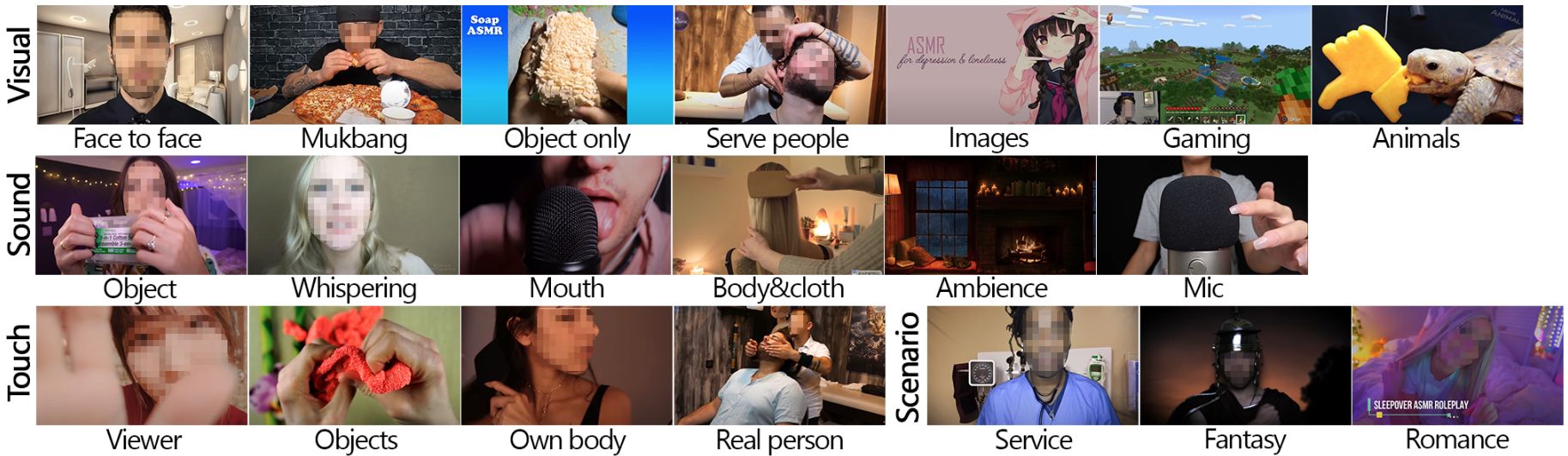
Online Videos for Mental and Social Well-being

Examining the unique role of video sharing in supporting socio-emotional experiences and coping with mental health conditions on platforms such as YouTube and TikTok.

  • Examined how YouTubers help mitigate COVID loneliness.
  • Categorized the social, sensorial, and emotional experiences created by ASMR videos.
  • Examined how YouTube videos are used to discuss drug addiction.

Teaching

Teaching Focus

I emphasize constructivist learning, active learning, project-based development, and responsible AI literacy. Students learn through hands-on experiences, building real systems, and critiquing design trade-offs from human-centered perspectives.

Computer Science Data Science

Courses

The course introduces foundational web-development concepts and skills for building modern full-stack applications. This course is designed for computer science majors who already have basic programming and software engineering knowledge. The goal is to let students experience front-end and back-end development by learning essential web-programming languages, having hands-on tutorials, and building real-world applications. The course focuses on the front-end but covers basic knowledge in the back-end. The course covers internet basics, HTML, CSS, JavaScript, React, RESTful API, NodeJS, and SQL/NoSQL database. Through the course, students are expected to be able to design, develop, and deploy full-stack web applications for different use cases.

The primary objective of this course is to teach how to provide software-based mobile solutions to complex problems for mobile devices. The course focuses on twelve main modules that are unique to mobile computing: Intro to Mobile Programming, Mobile GUI, Activity and Fragment, Navigation, Architecture Components, Internet and Database, Cloud Computing, Background Processing, Media and Animation, Sensors and Location, and Touch and Camera. Other advanced topics such as mobile VR and smartwatch will also be introduced. Through this course, students are expected to be able to design and develop mobile applications for different use cases, with chances to practice solving real-world problems with mobile solutions. This semester's course focuses on the Android development platform, based on the Android development language - Kotlin. The course will focus primarily on the mobile phone platform, with development opportunities for tablets, Android TV, and wearables.

This course aims to equip students with foundational knowledge in HCI and provide practical skills in analyzing user needs, designing interfaces, developing prototypes, and assessing their effectiveness. A significant component of the course is a team-based project where students will apply their skills to design innovative applications utilizing emerging Generative AI technologies, such as ChatGPT and Midjourney.

The course introduces foundational statistical and computational concepts and skills in data-centered computing and applications. It provides a toolkit of data processing and analysis methods and techniques, with hands-on opportunities for students to handle real-world datasets and extract information and knowledge from the data. The course covers data representations in Python, visualizing data, statistics and probability, data gathering and processing, intro to machine learning, regression, big data, and data ethics. Social issues surrounding data science, such as data privacy, bias, fairness, and social impacts, will also be discussed.

Develops computational problem-solving skills through programming, and exposes students to a variety of other topics from computer science and its applications. The focus of the course is to learn fundamental computational concepts (information, algorithms, abstraction, and programming) that are central to computer science, and that also happen to be instrumental for the computational investigation of science. Design, analysis, and testing of problem-solving techniques are applied to a variety of domains across the sciences and liberal arts. This is the first course for computer science majors and anyone seeking a rigorous introduction. No prior knowledge of programming is required, but good analytical skills are helpful.

Contact

If you are a Clark student and have questions about my class, you are welcome to attend my office hours as listed on Canvas or use the Schedule button on the right.
If you are interested in doing research with me, please email me with a brief introduction and a description of your research interests.
For students applying to PhD programs, please note that my department does not offer PhD programs.